Logs, metrics and traces.
Investigate them together.
Send telemetry directly to Epok through supported open agents. Search logs, explore metrics and follow traces in one workspace. Included AI groups related alerts and drafts probable causes with source links, or reports insufficient evidence.
Google sign-in · ingest pauses after 14 days · no automatic charge
No autonomous production changes · synthetic demo data
 demo scenario · synthetic data · no signup →
Documented open shippers send straight to Epok — there is no proprietary Epok agent for server-side telemetry.
Groups repeated alerts and related failures into one incident timeline.
Every committed verdict links to the lines, spans and metrics behind it — or it abstains.
Point the agents you already run at one destination.
Logs, metrics and traces land in one place, joined by trace and service.
Search logs. Explore metrics. Follow traces. See services.
One workspace, before any AI is involved.
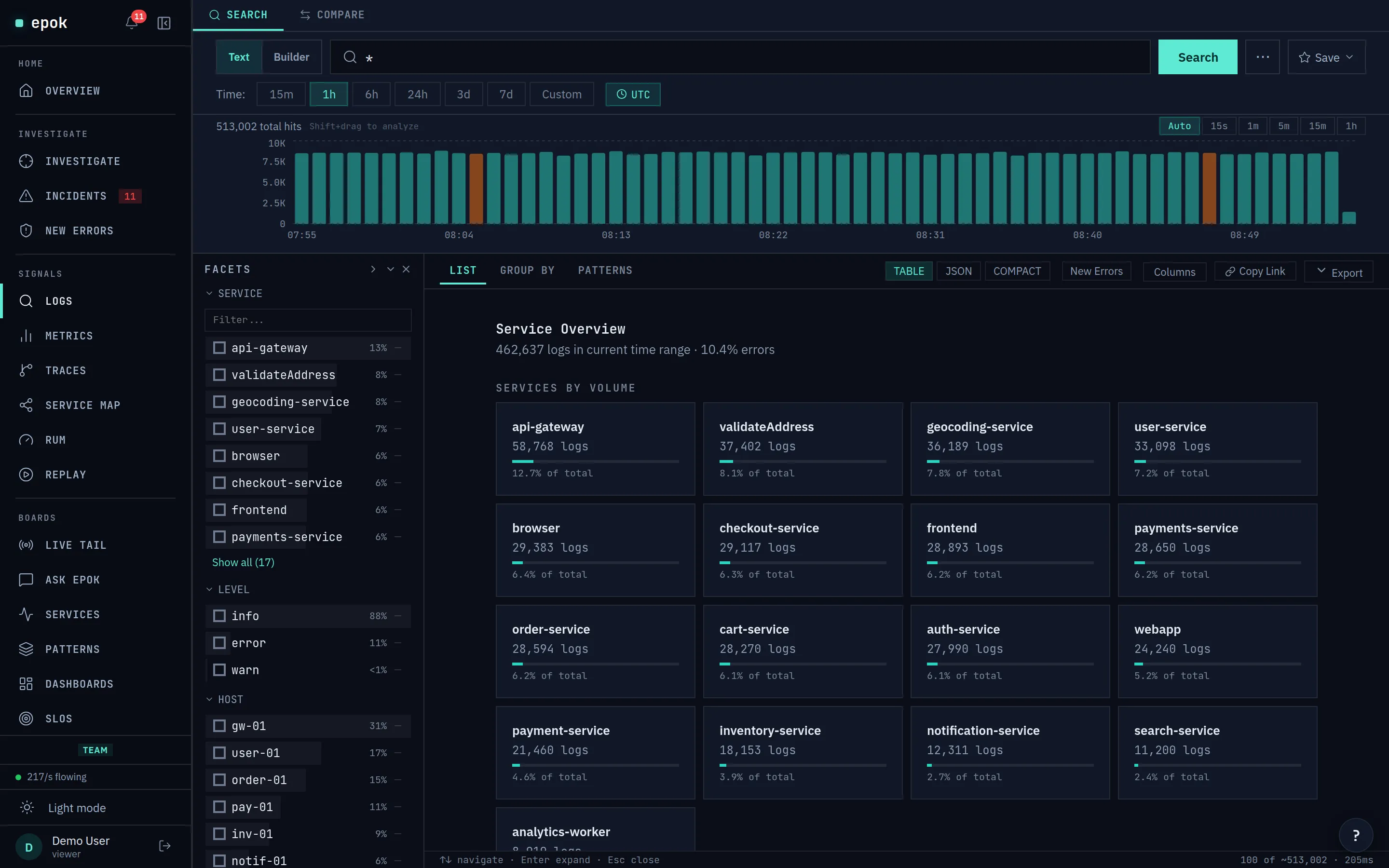 Logs — search, facets, patterns · synthetic data
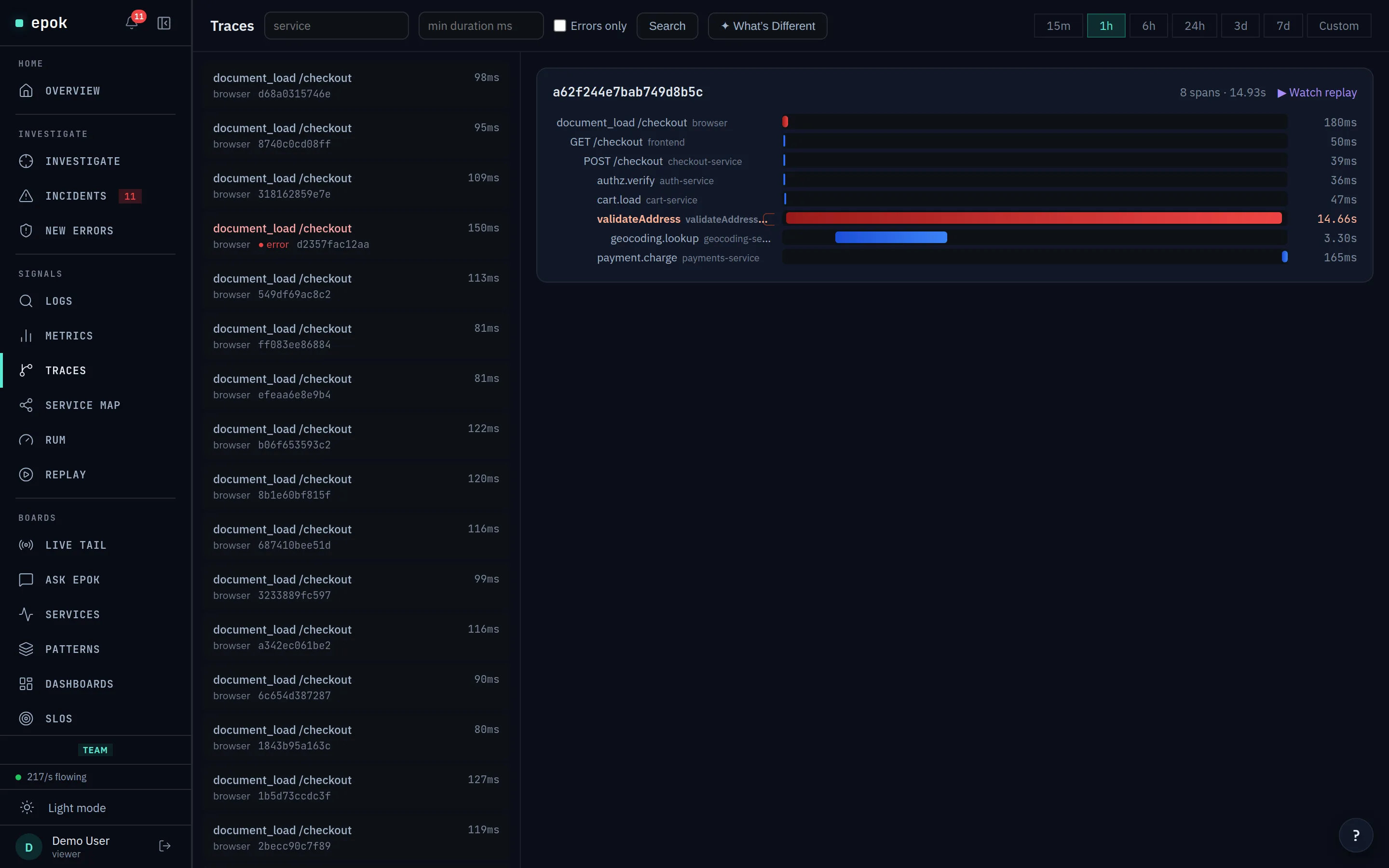 Traces — spans and waterfalls · synthetic data
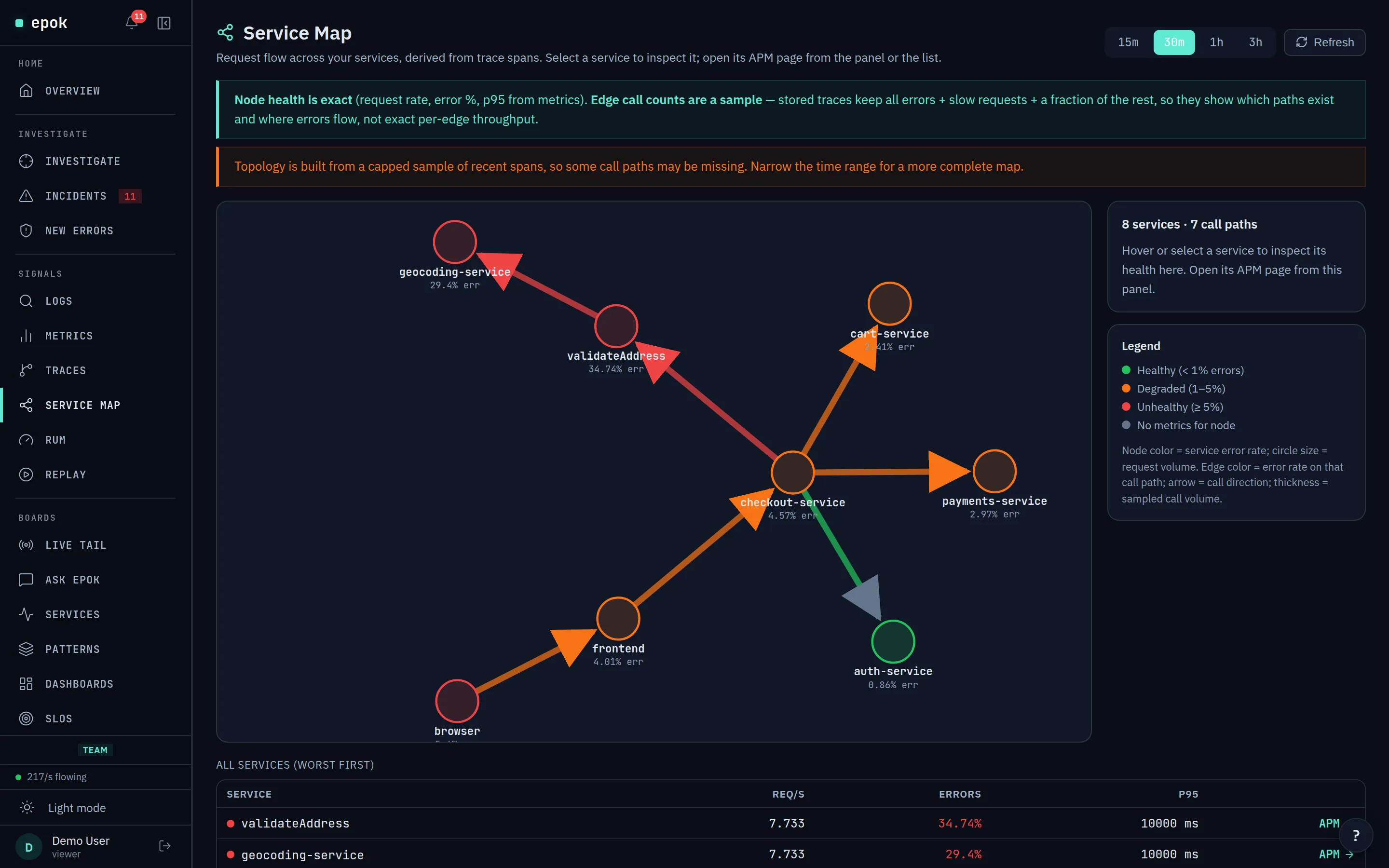 Services — request flow from spans · synthetic data
Metrics, live tail, dashboards and SLOs are in the same workspace. Write your own threshold or composite rules in the same search syntax. custom rules →
It commits when the evidence is there. When it isn't, it says so.
AI assistance is only useful if responders can distinguish evidence from fluency. Epok can abstain and show why the available signals do not support one cause. Use the trial to inspect both cases: committed verdicts and honest "not enough evidence" outcomes.
IMMEDIATE — rule packs match supported evidence as it arrives. LEARNS — baselines need enough history for the service. WHEN WIRED — customer impact and trace-linked replay need a customer identifier and shared trace context. Each detector states what it needs. see the catalog →
A next move, and the reason not to repeat it.
From a staged run on our own demo estate. Epok recommends; your responders execute.
A change immediately preceded the errors; reverting it is the fastest reversible mitigation.
$199/mo · 1 TB/month across logs, metrics and traces · 30-day retention · AI incident analysis included (daily allowance applies) · overage $0.20/GB · no host, query or cardinality charges.
Start with a representative service group.
Judge it on your next investigation.
Evaluating beside Datadog? Ship to both for 14 days — your paging stays authoritative. Plan your evaluation →